

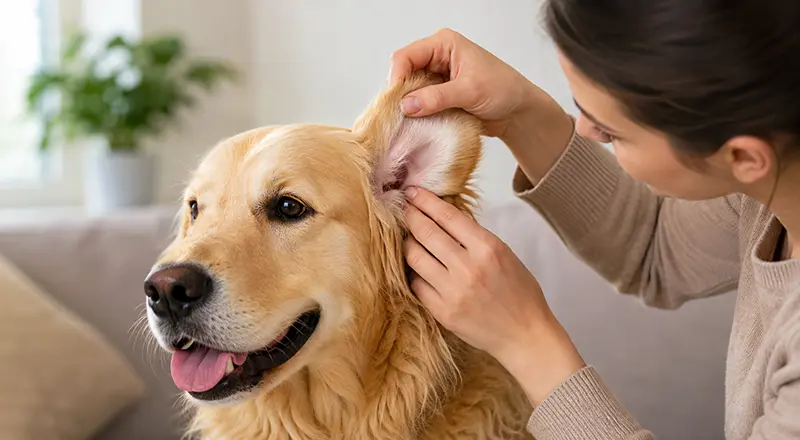
Dog ear infection prevention starts with a few simple weekly habits. Ear infections are uncomfortable, common, and often recurring. Dogs with floppy ears, allergies, or lots of time in water face the highest risk. The best approach is prevention. A few quick checks and good airflow help you catch issues early and reduce the chance of infection.
Why Ear Infections Happen
A dog’s ear canal has a different shape than a human’s. This means moisture and debris get trapped more easily. When the ear stays warm and damp, yeast and bacteria multiply.
Common risk factors include:
- Moisture (swimming, bathing, humid weather)
- Allergies (environmental or food-related)
- Floppy ears or heavy ear hair (less airflow)
- Wax buildup or debris
- Frequent scratching due to irritation
Dog Ear Infection Prevention Starts With Weekly Checks
- Redness or swelling
- Unusual odor (often the first sign)
- Dark waxy buildup or discharge
- Sensitivity when you touch the ear
- Head shaking or ear scratching
Good Airflow Matters More Than Most People Realize
Airflow helps ears stay dry, and dry ears resist yeast and bacterial overgrowth.
Simple ways to support airflow:
- Keep ears dry after baths or swimming
- Gently towel-dry the outer ear flap
- Ask your vet about a safe drying/cleaning routine if your dog is prone to infections
- Don’t assume ears “air dry” on their own after water play
- Manage matting around the ears, since mats trap moisture
- Ask about ear hair care rather than plucking at home
Some dogs benefit from professional grooming to manage ear hair safely. Our professional dog grooming team can advise what works best for your dog’s coat and ear shape.
Extra Prevention Tips for Frequent Swimmers
- Use only vet-recommended ear cleaners; human products can irritate
- Don’t insert cotton swabs deep into the ear canal
- Keep up with allergy management if your dog is itchy year-round
When to Call the Vet
If your dog has persistent head shaking, pain, strong odor, discharge, or recurring infections, don’t wait. Ear infections can worsen and lead to chronic inflammation if you don’t treat them.
A little prevention goes a long way. That’s the core of dog ear infection prevention: regular checks, good airflow, and quick action when something looks off.