
Dogs collect more than memories on their daily rounds. Their coats pick up dirt, loose hair, and tangles that a five-minute brushing at home never quite catches. That is the work professional dog grooming covers: the coat care most owners cannot do thoroughly or comfortably on their own.
At The Barrie Inn in Woodmere, grooming visits are tailored to each dog’s coat, breed, age, and temperament, from a routine bath to a full haircut. This post walks through what a professional appointment actually involves and how to tell how often your own dog should be on the table.
What Professional Dog Grooming Covers
Regular grooming does more than make a dog look tidy. A clean coat is easier to keep tangle-free, trimmed nails protect the way a dog stands and moves, and hands-on handling makes it easier to notice changes in the skin, coat, ears, or paws before they turn into something the veterinarian has to chase down.
- Bathing and coat conditioning
- Brushing and de-shedding treatments
- Haircuts and coat trimming
- Nail clipping and trimming
- Ear cleaning
- Sanitary and paw-and-pad trimming
- Breed-appropriate styling and optional add-ons
Bath and Brush Visits
A bath and brush appointment is the workhorse of any grooming menu. It removes the dirt, odors, loose fur, and debris that build up on dogs who spend time outdoors, shed heavily, or need regular coat maintenance between full grooming appointments. A typical visit includes a coat assessment, a thorough bath and rinse, conditioning when the coat calls for it, drying, brushing, loose-hair removal, and a light finishing cleanup.
Between appointments, home brushing still matters: it cuts down on matting and distributes the coat’s natural oils, so professional visits stay quicker.
Haircuts and Coat Trimming
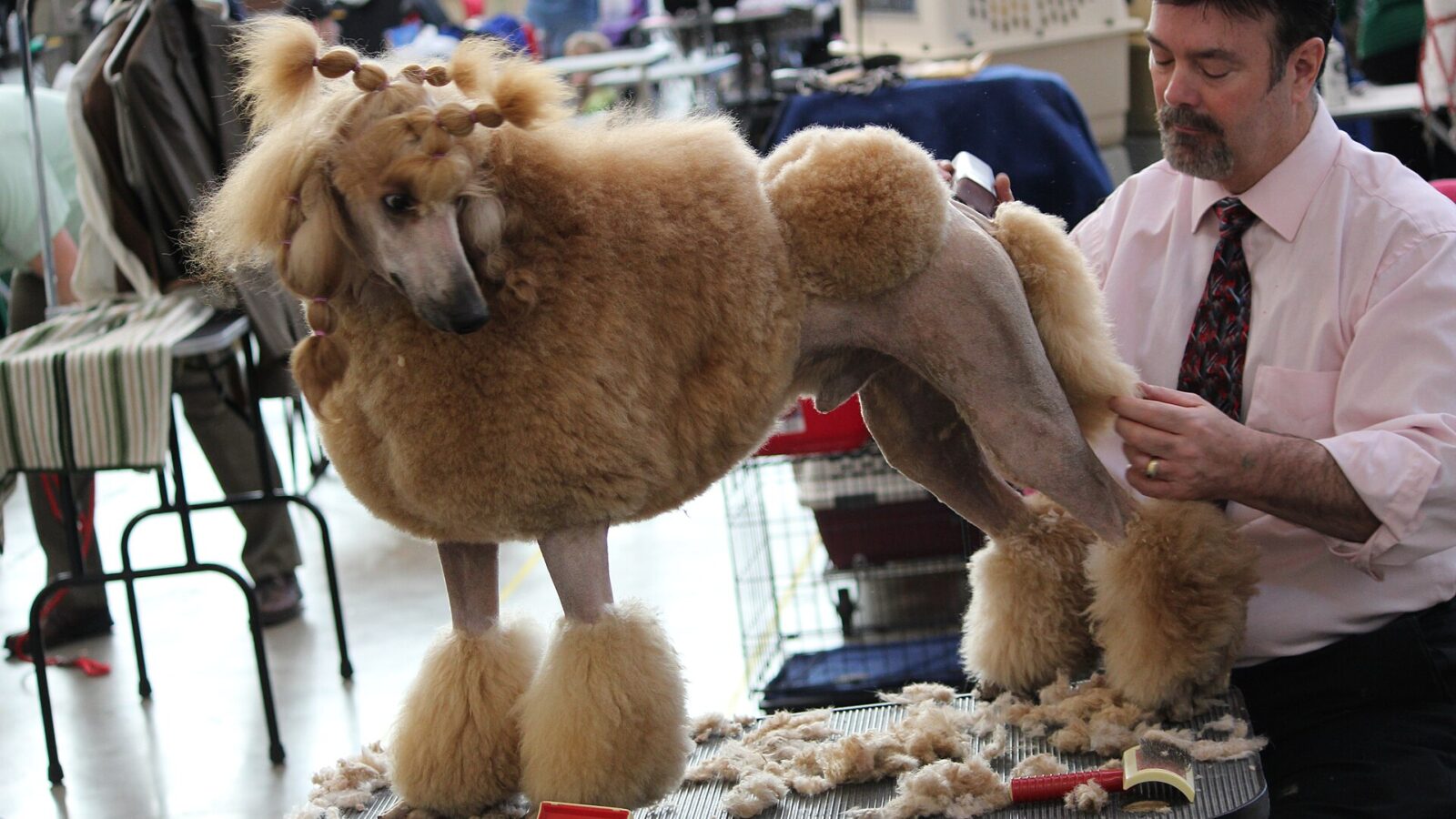
Different breeds and coat types need different techniques. Some dogs benefit from routine full-body haircuts, while others only need shaping, feathering, or removal of excess coat. Groomers discuss the desired length and style before they start, then work toward either a breed-inspired cut or a practical, low-maintenance trim instead.
Matted coats get handled differently. If a dog arrives heavily tangled, the safest and most comfortable option may not be the style the owner asked for, and a good groomer explains the choices and puts the dog’s comfort first.
Nails, Ears, and Paws
Overgrown nails change how a dog stands and walks, and they can make every step uncomfortable. Plenty of dogs are touchy about their paws, so calm, patient handling does as much work as the clippers. How often nails need trimming depends on activity level, nail growth, age, and how quickly the nails wear down.
Ear cleaning is the other quiet maintenance item. Routine cleaning removes visible dirt, debris, and excess wax from the outer ear, and dogs with floppy ears, heavy ear hair, or allergies often need it more frequently. One boundary matters here: grooming supports, but never replaces, veterinary care. Redness, swelling, discharge, strong odor, head shaking, or persistent scratching all belong at the veterinarian’s office first.
De-Shedding for Heavy Shedders
For dogs who leave fur on everything they pass, a de-shedding treatment targets the trapped undercoat that normal brushing does not reach. Shedding volume varies with breed, coat type, season, diet, health, and the home environment; owners of chronic shedders usually notice the difference at home within days.
How Often Should a Dog Be Groomed?
There is no single schedule that fits every dog. The right interval depends on breed, coat type, activity level, health, lifestyle, and how much maintenance happens at home. Long or curly coats, dogs that mat easily, heavy shedders, and dogs who spend lots of time outdoors need more frequent appointments. Short-coated dogs may only need periodic bathing, nail care, brushing, and ear cleaning.
A reasonable rule of thumb: watch the coat, not the calendar. Mats behind the ears, nails clicking on the floor, or a paw licked raw between the toes all say the next appointment should not wait for the next long weekend.
Puppies, Seniors, and Nervous Dogs
Puppies do best when their first appointments are short, gentle, and calm on purpose: bathing, brushing, dryers, nail trims, ear handling, and the grooming table all introduced at the puppy’s pace, which makes every future appointment easier for puppy and groomer alike.
Senior dogs usually need the opposite kind of accommodation: patience. Arthritis, reduced mobility, sensitive skin, or difficulty standing for long stretches can shape the whole appointment, so owners should mention any medical condition, sensitive area, or recent health change when they book.
Nervous dogs fall in between. Patient handling and close attention to body language go a long way, but owners should be upfront about known fears, handling concerns, or past grooming trouble. Some dogs need a modified service, more appointments, or a different arrangement entirely; safety and comfort outrank the original plan.
Booking a Grooming Appointment
The Barrie Inn’s grooming window runs from a first available appointment at 8 a.m. to a last available appointment at 2 p.m. Optional add-ons customize the visit: de-shedding, deep-conditioning, specialty shampoos, extra brushing, teeth brushing, paw care, extra dematting time, and finishing services.
Grooming also works alongside boarding. Owners can schedule bathing, nail clipping, a full groom, or coat brushing during a cageless boarding stay, so the dog comes home clean, comfortable, and ready to settle back into the household routine.
The most useful thing an owner can bring to a grooming appointment costs nothing: information. What the coat has been doing, where the tangles live, which handling the dog resents, and any health changes since the last visit. Groomers can work around almost anything as long as they know about it in advance.
A well-groomed dog is not a luxury. Steady home brushing, nails kept short enough that they never announce the dog’s arrival, ears checked on a routine, and a professional appointment whenever the coat outpaces the clippers. That combination keeps a dog comfortable, keeps small problems small, and doubles as a head-to-tail check most owners would never schedule on its own.